
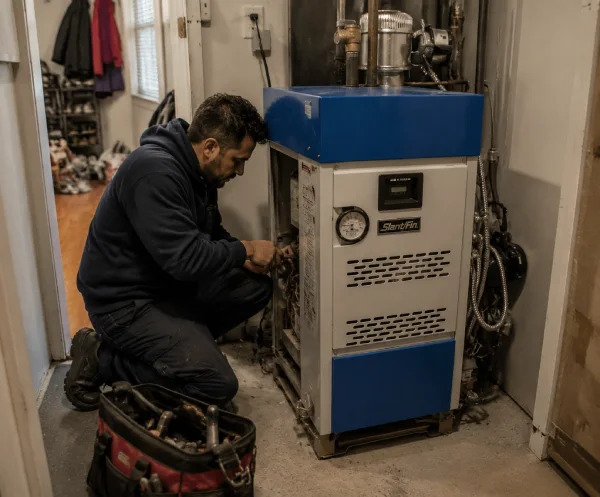
Slant/Fin Boiler Repair
- Boiler not producing heat
- Fault codes on the control board
- Aquastat or thermostat not responding
- Weak or no hot water
- Ignition or pilot won't engage
- Water leaking from the boiler
- Low or fluctuating system pressure
- Loud banging, kettling, or humming
- Short cycling on and off
- Sudden spike in energy bills
- Circulator pump not running


Our Happy Customers







Common Slant/Fin Boiler Problems We Deal With
- No heat output
- Fault codes on the board
- Weak or no hot water
- Ignition or pilot won't engage
- Water leaking from the boiler
- Low or fluctuating pressure
- Aquastat not communicating
- Loud or unusual noises
- System won't start
- Short cycling
- High energy bills
- Circulator pump failure
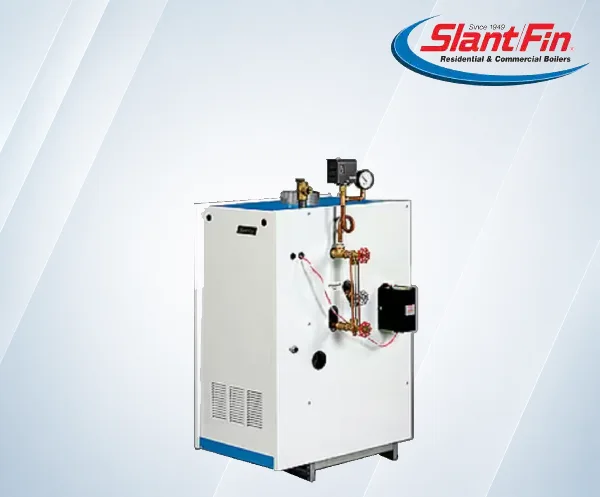
No Heat Output
When a Slant/Fin boiler stops producing heat, the cause is usually tied to a failed ignition module, a tripped high-limit switch, a low water cutoff issue, a clogged burner, or a control board that's no longer firing the sequence correctly. Slant/Fin's compact cast iron units often flag the issue with a diagnostic code before the symptom becomes obvious, so an early inspection can save you from a bigger repair.
Our technicians work on the full Slant/Fin lineup, from Sentry and Galaxy cast iron boilers to Eutectic and other high-efficiency condensing models, and diagnose heating problems quickly. We'll get your Slant/Fin boiler back to full performance for the season ahead.
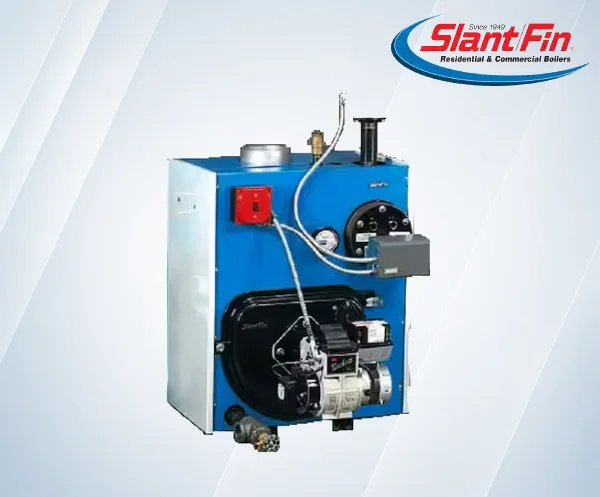
Fault Codes on the Board
Slant/Fin control boards log fault codes through an LED flash sequence or diagnostic display, and misreading them can lead to the wrong part being replaced. Common triggers include a flame sensor fault, ignition lockout, low water cutoff trip, or a communication error between the board and the aquastat.
Our technicians know how to pull and interpret Slant/Fin's diagnostic codes and trace them back to the actual failing component, so you're not paying for guesswork.
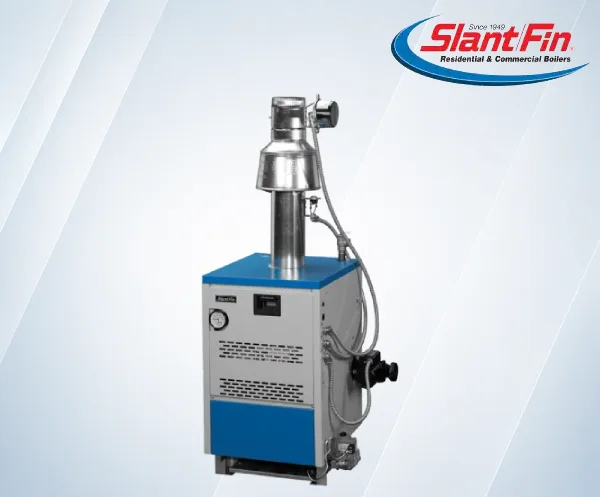
Weak or No Hot Water
Reduced hot water output from a Slant/Fin combi boiler or indirect water heater usually points to mineral buildup on the heat exchanger, a failing diverter valve, a bad thermistor, or a flow restriction. Hard water areas can accelerate scale buildup and reduce output over time.
We'll inspect the heat exchanger, valves, and sensors, then restore proper hot water output so your Slant/Fin system runs the way it was designed to.
Ignition or Pilot Won't Engage
If your Slant/Fin boiler won't light, common causes include a failed ignition module, a dirty or misaligned flame sensor, a clogged pilot orifice, or a gas valve that isn't opening. On classic cast iron models, a standing pilot light that's gone out is often the simplest explanation.
We'll test the ignition system and gas supply first, since that's often the fastest and most affordable fix, and move on to deeper diagnostics only if needed.
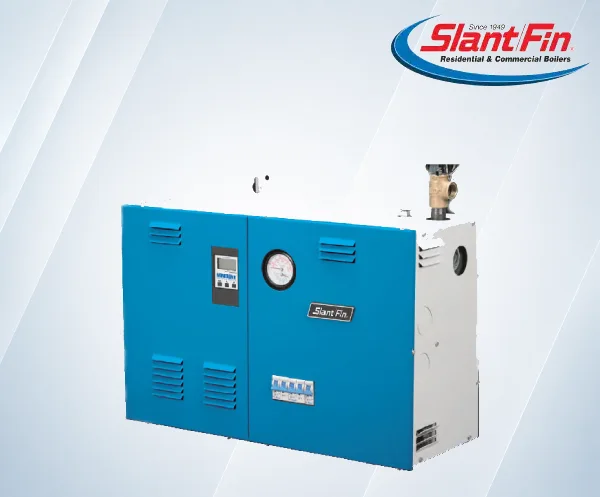
Water Leaking from the Boiler
Water around your Slant/Fin boiler is typically caused by a failed pressure relief valve, a cracked heat exchanger, a leaking circulator pump seal, or corroded pipe fittings. Left unresolved, this can damage flooring, drywall, and surrounding equipment, and may signal a bigger internal problem.
Our technicians will locate the source of the leak, repair or replace the failed part, and confirm the system holds pressure properly before we leave.
Low or Fluctuating Pressure
Low or unstable pressure on a Slant/Fin boiler almost always traces back to a small leak somewhere in the system, a faulty pressure relief valve, a failing expansion tank, or trapped air that hasn't been bled out. Running the boiler at the wrong pressure can trigger safety lockouts or reduce heating performance.
We'll check the expansion tank, bleed the system, and repair the underlying cause so pressure stays where it should.
Aquastat Not Communicating
Slant/Fin's aquastat and control system rely on constant, accurate communication with the boiler to regulate water temperature and firing cycles, so a wiring fault, a failed sensor, or a bad control board can cause erratic temperatures or a system that ignores commands entirely.
We'll test the aquastat wiring, check the control board, and reset or recalibrate the system so it's regulating your Slant/Fin boiler the way it should.
Loud or Unusual Noises
Banging, kettling, or a persistent rumbling from your Slant/Fin boiler usually means mineral scale has built up on the heat exchanger, trapped air is moving through the pipes, or the circulator pump is wearing out. Kettling in particular is a sign the boiler is working harder than it should.
We'll track down exactly where the noise is coming from, flush or descale the system if needed, and repair the part before it turns into a bigger mechanical failure.
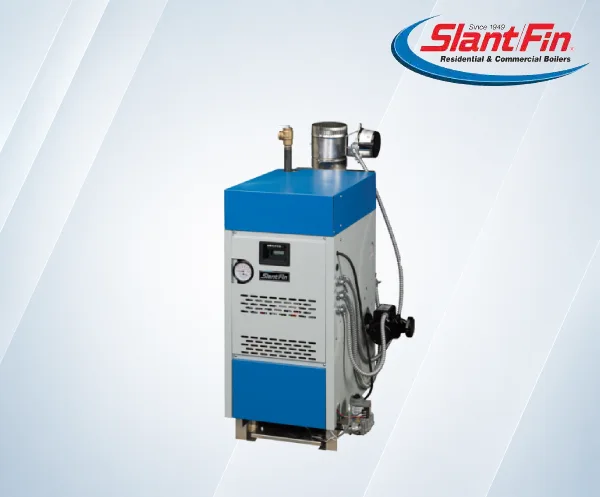
System Won't Start
If your Slant/Fin boiler won't power on at all, check first for a tripped breaker or blown fuse — but the deeper cause is often a failed transformer, a bad thermostat or aquastat, a low water cutoff that's stuck open, or a control board fault.
We run a full electrical and safety-circuit diagnostic on Slant/Fin equipment to find the actual cause and get your system started again without unnecessary part swaps.