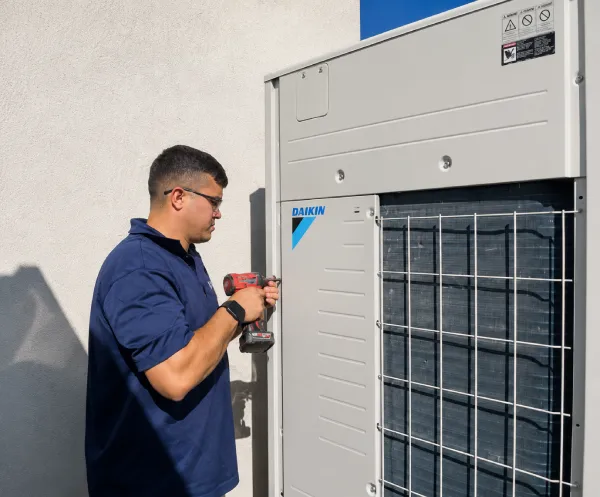
Daikin HVAC Repair
- Daikin system not cooling or heating
- Fault codes on the control board
- Daikin One+ thermostat not responding
- Weak or uneven airflow
- Inverter compressor won't engage
- Water pooling around the unit
- Frozen evaporator coil
- Loud clicking, buzzing, or humming
- Short cycling on and off
- Sudden spike in energy bills
- Clogged or dirty filters

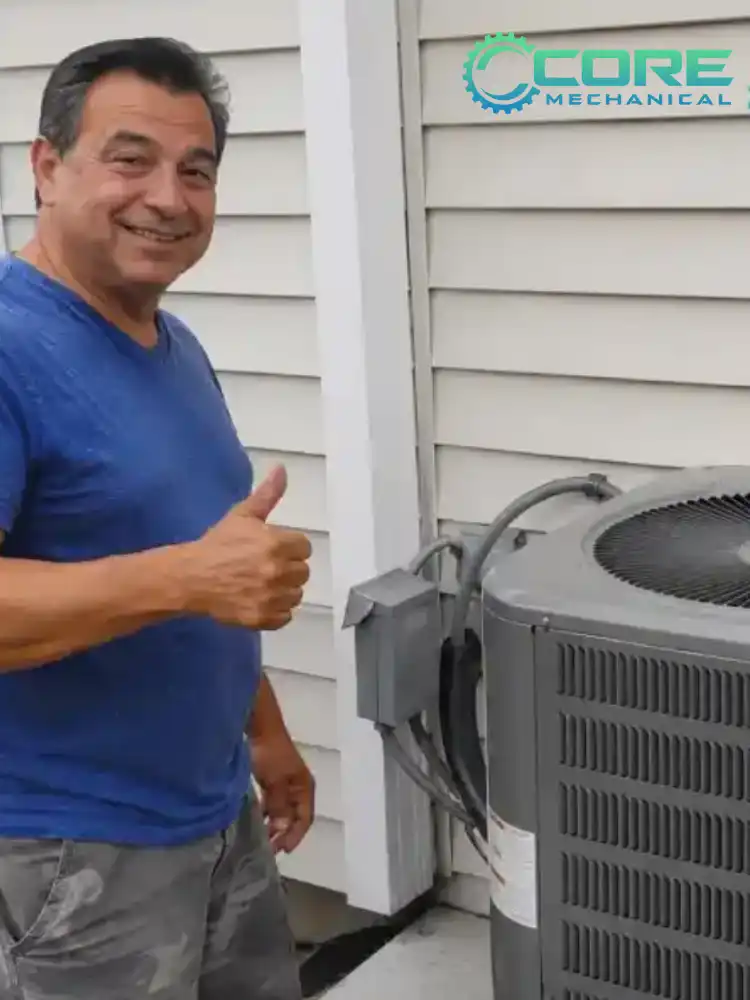
Our Happy Customers




Common Daikin HVAC Problems We Deal With
- No heat or cool output
- Fault codes on the board
- Weak or restricted airflow
- Inverter compressor won't engage
- Water leaking or pooling
- Frozen evaporator coil
- Daikin One+ not communicating
- Loud or unusual noises
- System won't start
- Short cycling
- High energy bills
- Poor indoor air quality
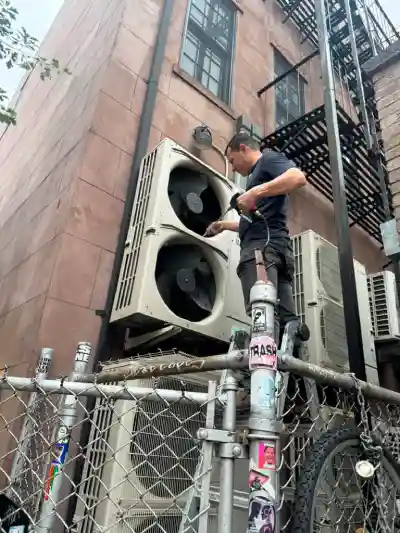
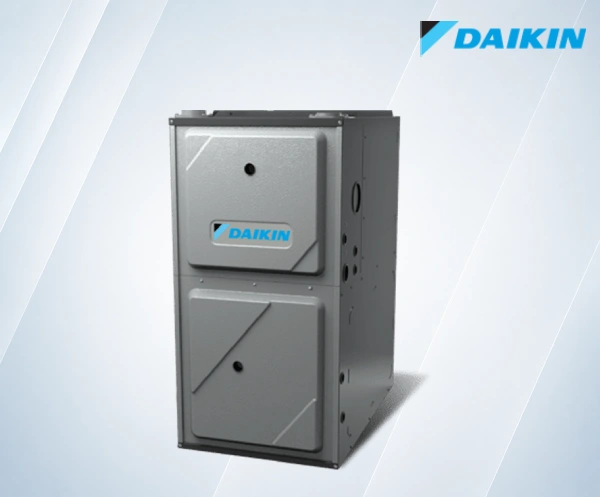
No Heat or Cool Output
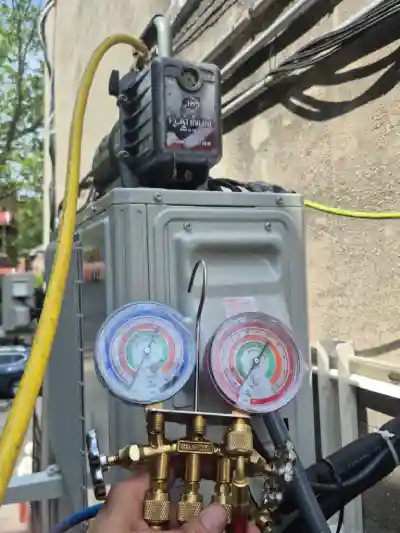
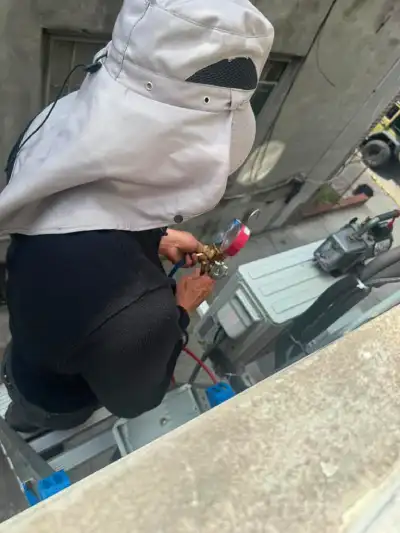
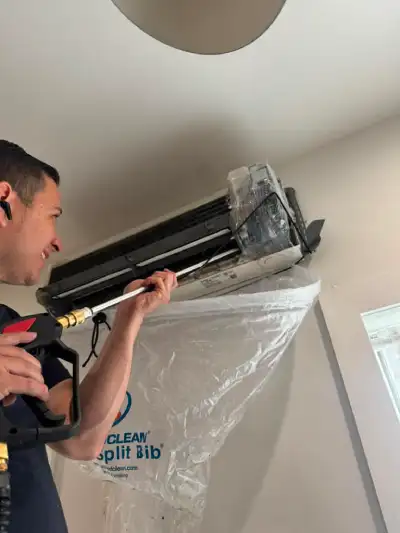
When a Daikin system stops producing warm or cool air, the cause is usually tied to a failed igniter or heat exchanger, low refrigerant, a bad capacitor, a clogged filter, or an inverter compressor that's no longer cycling correctly. Daikin's Fit and Comfort series units often flag the issue with a diagnostic code before the symptom becomes obvious, so an early inspection can save you from a bigger repair.
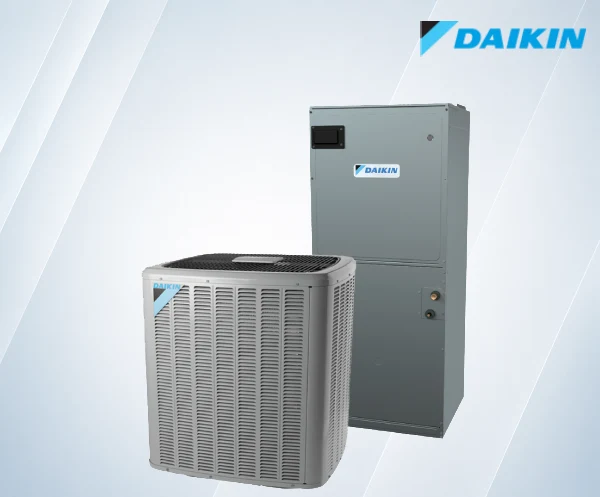
Our technicians work on the full Daikin lineup, from ducted central systems to Fit and Comfort ductless mini-splits, and diagnose heating and cooling problems quickly. We'll get your Daikin system back to full performance in every season.
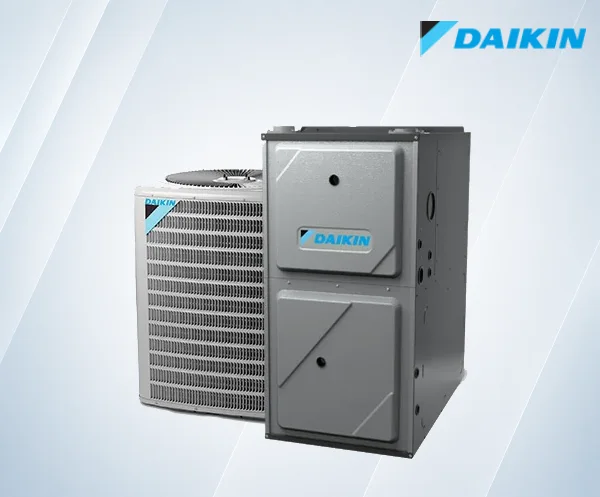
Fault Codes on the Board
Daikin control boards log fault codes through an LED flash sequence or diagnostic display, and misreading them can lead to the wrong part being replaced. Common triggers include a pressure switch fault, sensor issue, limit switch trip, or a communication error between the board and thermostat.
Our technicians know how to pull and interpret Daikin's diagnostic codes and trace them back to the actual failing component, so you're not paying for guesswork.
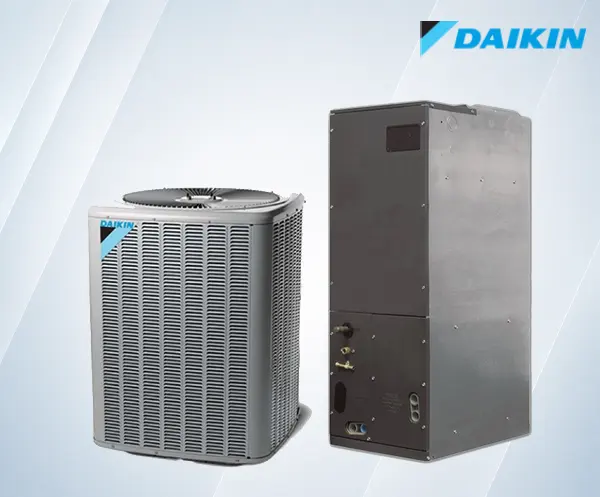
Weak or Restricted Airflow
Reduced airflow from a Daikin system usually points to a dirty filter, blocked return, a failing blower or fan motor, or ductwork issues. On ductless Daikin mini-splits, a dirty indoor coil or blocked air handler is a common culprit as well.
We'll inspect the blower, ducts or indoor unit, and filter housing, then restore proper airflow so your Daikin system runs the way it was designed to.
Inverter Compressor Won't Engage
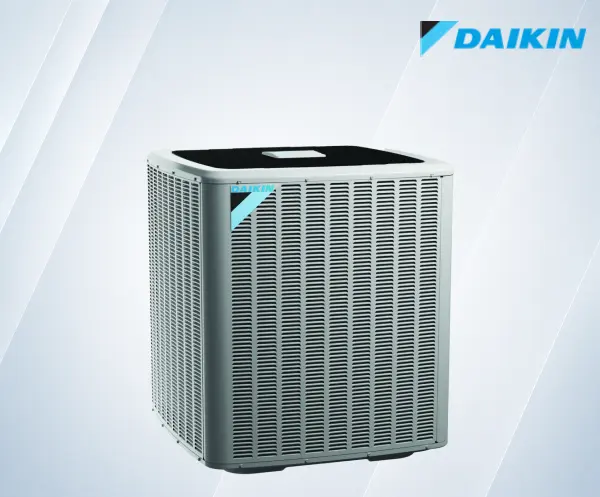
If the outdoor unit powers on but the inverter compressor never ramps up, common causes include a failed inverter board, low refrigerant, a bad capacitor, or a communication fault between the outdoor and indoor units. Daikin's inverter compressors are more electronically complex than standard units, so proper diagnostic equipment matters here.
We'll test the inverter board and electrical components first, since that's often the fastest and most affordable fix, and move on to deeper diagnostics only if needed.
Water Leaking or Pooling
Water around your Daikin indoor unit is typically caused by a clogged condensate line, a cracked drain pan, a frozen coil that's now thawing, or a condensate pump that's stopped working. On ductless systems, a clogged drain hose inside the indoor unit is a frequent cause. Left unresolved, this can damage flooring, drywall, and ceilings.
Our technicians will clear the drain line, repair or replace the failed part, and confirm the system drains properly before we leave.
Frozen Evaporator Coil
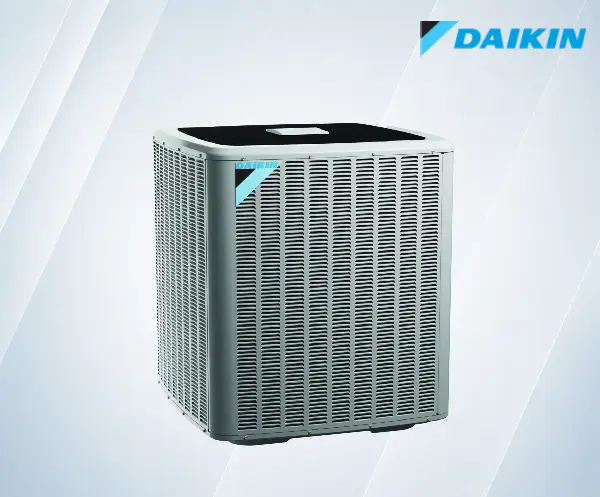
A frozen coil on a Daikin system almost always traces back to restricted airflow, a dirty filter, a refrigerant leak, or a failing blower or fan motor. Running the system while the coil is frozen can push liquid refrigerant back into the compressor and cause serious damage.
We'll shut the system down safely, let it thaw if needed, identify the root cause, and repair it so the coil doesn't freeze again.
Daikin One+ Not Communicating
Daikin's One+ smart thermostat relies on constant communication between the thermostat and the equipment, so a wiring fault, a firmware glitch, a Wi-Fi dropout, or a failed control board can cause lost connections, incorrect readings, or a system that ignores commands entirely.
We'll test the communication wiring, check the control board, and reset or recalibrate the thermostat so it's talking to your Daikin equipment the way it should.
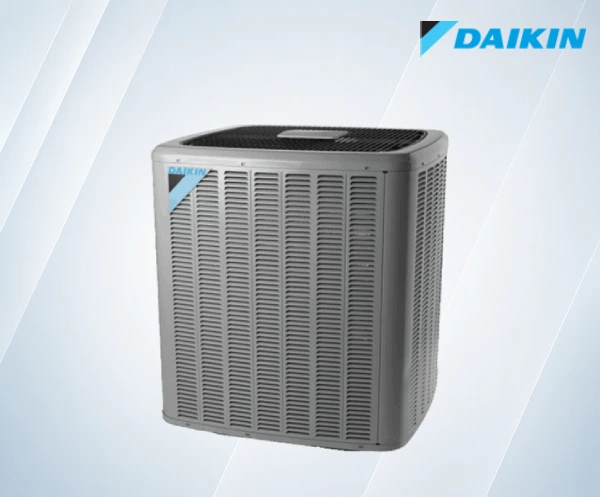
Loud or Unusual Noises
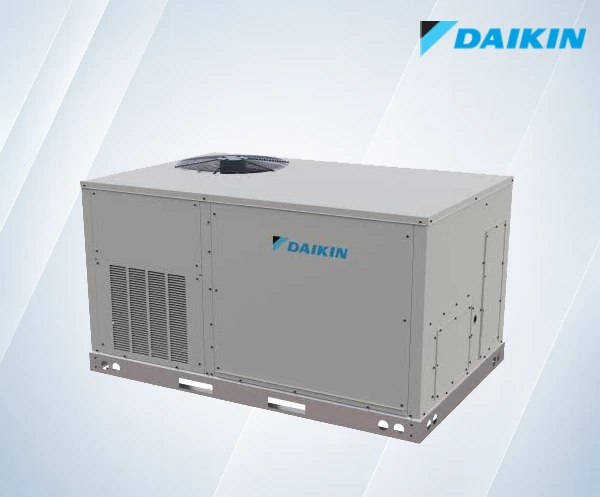
Clicking on startup is normal, but grinding, screeching, banging, or a persistent buzzing from your Daikin unit usually means a part is loose, worn, or failing. This can involve the fan blade, blower wheel, compressor mounts, or ductwork.
We'll track down exactly where the noise is coming from and repair or replace the part before it turns into a bigger mechanical failure.
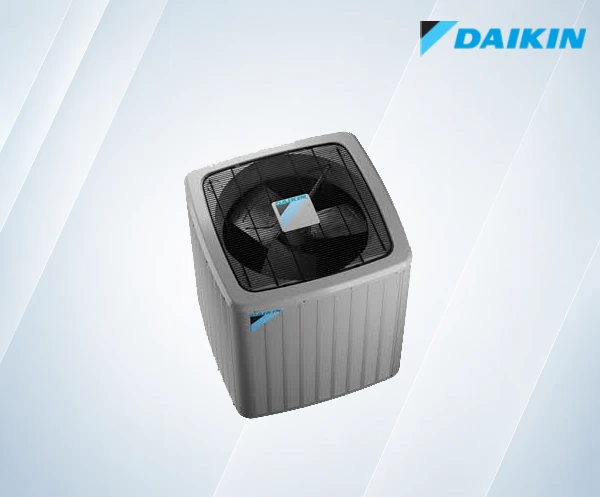
System Won't Start
If your Daikin system won't power on at all, check first for a tripped breaker or blown fuse — but the deeper cause is often a failed transformer, a bad thermostat, a safety switch that's stuck open, or a control board fault.
We run a full electrical and safety-circuit diagnostic on Daikin equipment to find the actual cause and get your system started again without unnecessary part swaps.